

According to Kurdpress, while the Turkish government has announced a new legal package to advance the peace process with the Kurdistan Workers' Party (PKK), many politicians and analysts believe that the success of this process depends more than anything on Ankara's readiness to carry out political and legal reforms. After the dissolution of the PKK and the end of the armed activities of this group, the Kurds are now waiting for the government to take reciprocal practical steps.
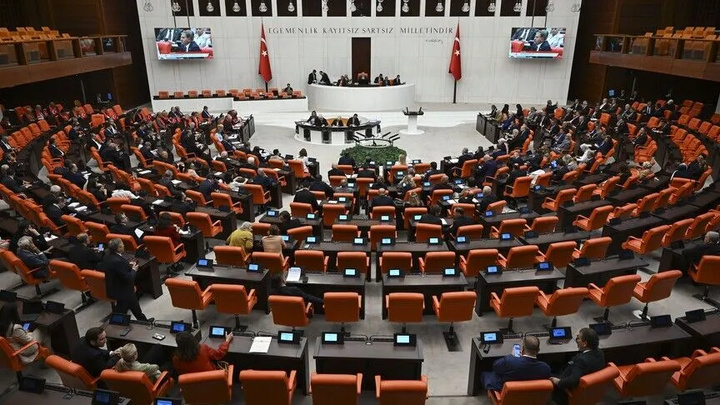
Turkish President Recep Tayyip Erdoğan announced last week that a new legal framework for advancing the peace process will soon be presented to the parliament, which can bring negotiations between the government and the PKK to a new stage after months of stalling.
The current peace process started in October 2024 with the initiative of Dalut Bagheli, the leader of the National Movement Party. He suggested that Abdullah Ocalan, the imprisoned leader of the PKK, could enjoy parole if he is invited to disarm this organization.
After that, Abdullah Öcalan asked the PKK to end its armed activities. This organization also decided to liquidate in its congress in May 2025. Later, a group of PKK forces in the Kurdistan region of Iraq surrendered and destroyed their weapons during a ceremony.
The Turkish government is expected to submit a draft of the new legal framework to parliament after the NATO summit in early July. Jilan Akcha, a representative of the People's Equality and Democracy Party (Dem Party), believes that this legal package can be the beginning of a series of fundamental reforms.
He says this framework should act like a "stem cell"; It means to prepare the ground for further reforms in the laws and to remove the historical discrimination against the Kurds. According to him, instead of waiting for the government, the Dem party will hold meetings, gatherings and workshops in different cities to gather the people's demands about the peace process and the needed reforms.
According to Gonol Tol, Türkiye program director at the Middle East Institute, it is possible to reach a limited agreement between the government and the Dem party; An agreement that would likely include some form of amnesty for PKK members. But the main problem remains. The Turkish government wants to complete and fully verify the disarmament of the PKK before any political action, while the Kurdish side believes that political reforms and legal guarantees should be implemented at the same time or even before the complete end of the disarmament process. Asli Aydintashbash, a researcher at the Brookings Institution, believes that the Kurds have taken almost all the steps necessary to build trust, and now it is the turn of the Turkish government. According to him:
Öcalan accepted the dissolution of the PKK;
He supported the integration of the Syrian Democratic Forces into the new structure of Syria;
announced the end of the armed struggle;
According to this analyst, now is the time for Erdoğan to approve the Law of Return, which will allow PKK members with no history of participating in violent acts to return to Turkey. He warns that public confidence in the peace process will be damaged if this law is not passed before the summer recess of parliament.
On the other hand, Aliza Markus, a researcher of Kurdish issues and the author of the book "Resurgence and Revolution", believes that simply granting amnesty to the PKK forces will not be enough to end the conflict. According to him, the main demands of the Kurdish movement include the following:
recognition of Kurdish identity in the constitution;
Guaranteeing linguistic and cultural rights;
Kurds' freedom of political activity;
and determining the status of Abdullah Öcalan.
According to Marcos, if the government's goal is only to formalize the end of the PKK's military activity and not to solve the Kurdish issue, this process cannot lead to lasting peace.
Claiming legal guarantees
Zagros Hiva, the spokesperson of the Union of Kurdistan Communities, also emphasized earlier that this process will not continue without legal and political guarantees. According to him, although the Turkish government no longer denies the existence of the Kurds, no specific legal status or constitution has been defined for them yet.
Some analysts believe that Erdogan's government can strengthen the atmosphere of trust with symbolic actions, including:
Returning the Kurdish mayors who were dismissed after the failed coup of 2016;
the release of Kurdish politicians including Salahuddin Demirtash;
and the implementation of the "right to hope" principle, which provides the possibility of reviewing Abdullah Öcalan's parole.
However, the government has so far shown no desire to implement such measures, and Erdoğan has denied reports about the possibility of Ocalan's parole. Meanwhile, Dem party supporters in Kurdish cities of Türkiye are still holding rallies demanding the release of the imprisoned PKK leader.
Jengiz Çandar, a representative of the Dem Party and one of the veteran figures of the Turkish peace process, warns that the delay in presenting the legal framework could lead to the weakening of this process. He says that Kurdish public opinion and a significant part of Turkish society expect the package to be approved before the start of the summer vacation of the parliament, i.e. by the end of July. According to Chandar, although the details of this package are not yet clear and all discussions are speculative, the peace process has entered a stage from which it seems very difficult to return and sooner or later it will continue its course.
The peace process between Türkiye and the PKK has now entered its most critical stage. On the one hand, the government emphasizes the completion of the process of disarmament and the official end of the PKK activity, and on the other hand, the Kurdish political movement wants structural reforms, legal guarantees, and the recognition of Kurdish political and cultural rights. The success or failure of this process will depend, above all, on the content of the government's legal package and the readiness of Ankara to move beyond a purely security approach and enter the phase of political reforms.




Your Comment