

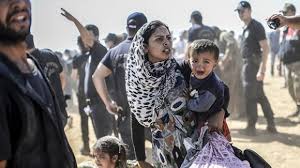
According to KurdPress, the return of hundreds of displaced Kurdish families to Serikani or Sarkani, which the Arabs call Ras al-Ayn - in northern Syria - after seven years was met with attacks by armed individuals and a wave of ethnic and social tensions. The incident has once again highlighted the issue of demographic changes, confiscated properties and the difficulty of refugees returning to their former areas of residence in Syria.On Monday, August 10, 2026, more than 400 Kurdish families attempted to return to Serikani, or Ras al-Ayn, from the Washukani camp in Hasakah as part of an agreement between the Syrian Democratic Forces and the Damascus government. The families had been trying to return to the city and their homes after seven years of displacement, but their return was met with attacks by armed individuals opposed to their return, causing widespread tension in the area.
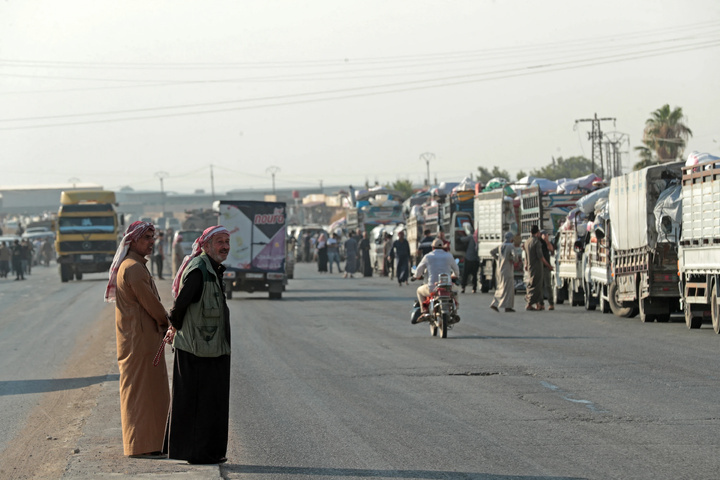
One of the displaced told New Region that the convoy consisted of about 650 families and nearly 100 vehicles. He said that during the incident, the attackers attacked a number of people with sticks and weapons and chanted slogans against the presence of the Kurds in the city. According to him, some people were injured or missing during these attacks, and some were taken to the hospital.Hasakah’s internal security officials said in their account that a clash broke out between returnees and current residents of the city after a number of families entered their homes without prior coordination, and security forces intervened to end the dispute. Security officials also said that they had dealt with the people involved in the incident and that investigations were ongoing into the other participants.
The incident occurred at a time when the issue of the return of refugees has become one of the sensitive issues in the agreement between Damascus and the Syrian Democratic Forces. According to the agreement of January 29, 2026 between the Syrian government and the SDF, Kurdish and Arab refugees should be able to return to their areas. Earlier, in May, about 1,300 families displaced from Afrin returned to their areas from Hasakah.
But the situation in Serikani is more complicated.The town was captured by the Turkish army and Syrian armed groups it supports in October 2019, displacing thousands of Kurds and Arabs from the town and surrounding areas. According to UN data, some 16,352 internally displaced people, mostly from Serêkani, live in the Washukani camp in northern Hasakah.
Over the past seven years, some of the families of the armed forces who entered the area have settled in Serêkani. According to a Kurdish journalist from the town, some of these families have settled in houses, shops and land belonging to displaced Kurds.
For some of the current residents, the return of the original owners of the properties means losing the property and status they have acquired over the years, he said.According to him, the lack of an independent mechanism to review title deeds, cancel forced transactions and restitute properties has created a situation in which practical control over land and houses determines the fate of properties more than the law.
This situation is considered one of the most significant obstacles to the return of displaced people to Serikani. Many of those who left the city in 2019 are now facing not only the destruction and looting of their properties, but also the presence of new residents in their homes and lands.
Meanwhile, the issue of displaced people’s return in Serikani is not limited to the conflict between Kurds and Arabs. The displaced people in the area include both Arab and Kurdish communities, and the Syrian government and the SDF have taken into account the return of both groups in their agreement.However, the recent incident has shown that the return of displaced populations in a context where property ownership and the security situation in the area are not settled can become a new source of conflict.
On the other hand, it is not clear which force is actually fully responsible for the security of Serekani. A Syrian human rights activist, speaking to New Region, called for an investigation into the perpetrators of the attack and asked whether the area is under the control of the Damascus government or armed groups operating outside the official structures. He stressed that the Syrian government must guarantee the security of returning displaced people and allow them to reclaim their properties.
The recent tensions have also occurred in the context of broader disagreements over the political and security future of northern Syria.Negotiations to integrate the SDF into the structure of the Damascus government have been pursued mainly at the level of political and military leaders, with limited public participation. According to a Damascus-based researcher, part of the Arab community is concerned about the role of SDF-affiliated forces in the future structure of Syria, while among the Kurds there are also concerns about the complete transfer of control of their areas to Damascus.
In this context, Serikani has become one of the most sensitive points of conflict over the demographic and political future of northern Syria. Not only has the city witnessed massive population displacement during the war, but the issue of the return of refugees is tied to issues of ownership, the presence of armed groups, and competition for political and security control of the area.Following the recent attack, security officials announced that the return process of the caravans has been temporarily suspended and will resume when the situation is stabilized and their full protection is guaranteed.
However, some displaced people are hesitant to return under the current circumstances. One member of the return caravan said that it would be difficult to return without security guarantees after what happened in Serekani. A Kurdish journalist from the city also said that so far no permanent return has taken place to Serekani itself, and even those who had returned have left the city again due to the destruction, looting of homes and lack of security.
Thus, the issue of Serekani is not just about the return of a few hundred displaced families; it is also a test of the policy of the Damascus government and the Syrian Democratic Forces towards the return of displaced people, resolving property ownership and preventing the stabilization of demographic changes caused by the war.Until the security of the displaced, property ownership, and the responsibility of the armed forces in these areas are clearly determined, the return of tens of thousands of displaced Kurdish and Arabs will continue to face serious obstacles.







Your Comment